

Amavata Explained: The Ayurvedic View of Rheumatoid Arthritis
Rheumatoid arthritis affects roughly 1% of the global population and is one of the few chronic autoimmune conditions that conventional medicine openly acknowledges it cannot cure, only manage. The joint pain, morning stiffness, bilateral swelling, and systemic fatigue that characterise the condition are familiar to millions of people, many of whom cycle through medications that address symptoms without resolving the underlying disease process.
Ayurveda described this condition in detail over a thousand years ago under the name Amavata, a compound of Ama, meaning undigested toxic matter, and Vata, the dosha governing movement and the nervous system.
The Ayurvedic understanding of this condition helps them start the right arthritis ayurvedic treatment.
What Ama Actually Is?
Ama is the product of incomplete digestion. When Agni, the digestive fire, is weakened or disrupted, food material that should be fully metabolised remains in a partially processed state. This undigested matter is sticky, heavy, and toxic in nature. It enters the Rasa Dhatu (nutritive fluid) and circulates through the body's channels, lodging in joints and connective tissues where it creates the environment of inflammation, swelling, and pain that characterises Amavata.
The production of Ama is the upstream event. Without addressing it, treating only the joint symptoms is, in Ayurvedic terms, treating the branch rather than the root.
Nidana: What Causes Amavata
Viruddha Ahara (unwholesome diet), Viruddha Cheshta (erroneous habits), Mandagni (diminished digestive fire), Nishchalata (sedentary lifestyle), and Snigdha Ahara Vyayamam doing exercise immediately after intake of oily food are the causative factors for Amavata as described by Madhavakara.
Breaking these down:
- Viruddha Ahara refers to food combinations or qualities that are incompatible with the individual's constitution or digestive capacity. Eating foods that are too heavy, too cold, or incompatible with each other regularly impairs Agni and promotes Ama formation.
- Mandagni, weakened digestive fire, is both a cause and a consequence of Ama accumulation. Once Ama begins to form, it further dampens Agni, creating a self-perpetuating cycle.
- Nishchalata, a sedentary lifestyle, specifically impairs Vata. Vata requires movement to remain in balance. A person who is largely physically inactive creates the conditions for Vata to become disturbed and for Ama to accumulate in the joints rather than being metabolised.
Samprapti: How the Disease Develops?
Impaired digestive fire affects metabolism and leads to the formation of Ama, partially indigested food material. This Ama, combined with vitiated Vata, travels through the body's channels and lodges in the joints, causing the characteristic pain, swelling, and stiffness of Amavata.
The progression follows a specific sequence in classical texts:
- Agni weakens due to causative factors
- Ama forms in the Amashaya (stomach and small intestine)
- Ama mixes with Vata and enters the Rasa Dhatu
- Ama-Vata combination travels through the srotas (channels) and settles in the joints
- Inflammation, swelling, and pain develop at the joint level
- In advanced stages, structural joint damage and deformity occur
Lakshana: The Symptoms as Described Classically
The most common manifestation of established Amavata is pain in the affected joints, which is aggravated by movement. The general symptoms described in Madhavanidana include:
- Angamarda generalised body ache
- Aruchi loss of appetite or altered taste
- Trishna thirst
- Alasya lack of enthusiasm and lethargy
- Gourava heaviness throughout the body
- Jwara intermittent fever
- Apaka indigestion
- Shunata Anganam swelling in the joints and body parts
In the advanced stage, the pain is described as "Vyavidha iva vrushchikei" like a scorpion bite, reflecting the severe, penetrating nature of the pain in established Amavata.
Chikitsa: The Approach to Arthritis Ayurvedic Treatment in Amavata
The treatment logic of Amavata is specific: Ama must be addressed before Vata can be treated. Applying the heavy, unctuous therapies that are normally used for Vata disorders oleation and Panchakarma procedures involving oils is contraindicated in the active Ama stage because these increase the adhesiveness and spread of Ama.
The initial phase of Ayurvedic treatment for Amavata focuses on Langhanam fasting or a light diet that rests Agni and reduces Ama formation and Deepana-Pachana herbal medicines that kindle Agni and digest accumulated Ama. Classical formulations used include Trikatu (three pungents: dry ginger, black pepper, long pepper), Chitrakadi Vati, and Amavataari Rasa.
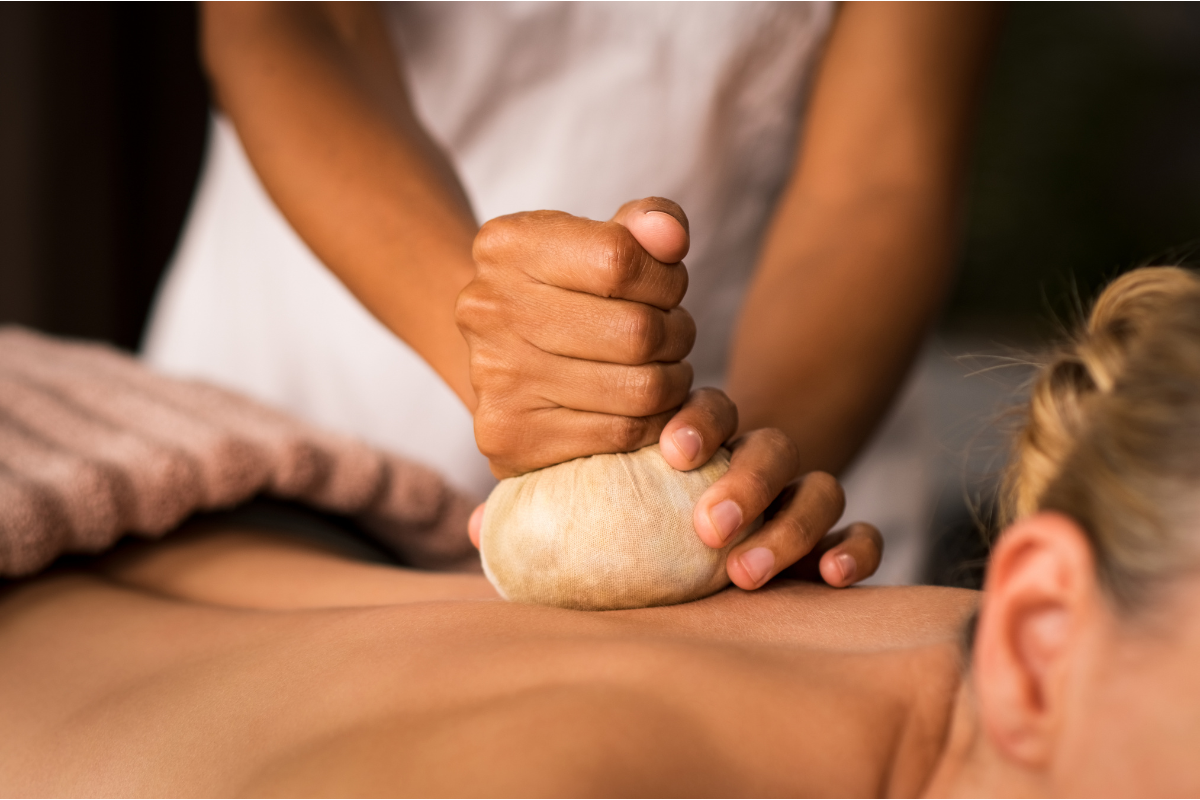
Once Ama is reduced, the treatment shifts to addressing Vata with internal oleation, specific Panchakarma procedures including Virechana (therapeutic purgation) and Basti (medicated enema), and external therapies including Pinda Sweda (bolus fomentation) and Janu Basti for knee joint involvement.
Arthritis Ayurvedic Treatment at Ayur Vaidya, Dubai
Ayur Vaidya is an Ayurvedic clinic in Dubai. The clinic provides arthritis ayurvedic treatment under certified Ayurvedic practitioners, following the classical protocols of Amavata Chikitsa with the full range of internal medicines, dietary guidance, lifestyle modification, and Panchakarma procedures. Treatments are personalised to the individual's Prakriti (constitution) and the current stage of their condition because the stage determines which interventions apply.
Final Take
Amavata is not a recent discovery or a modern reinterpretation; it was codified in classical Ayurvedic texts over a thousand years ago, with a detailed account of its causes, progression, and treatment that remains clinically relevant today. The connection between impaired digestion, Ama formation, and joint inflammation gives arthritis ayurvedic treatment a logical framework that addresses the disease at its origin rather than managing symptoms at the joint level alone. People in Dubai living with rheumatoid arthritis who want to explore what classical Ayurveda offers should visit Ayur Vaidya across its two Dubai locations. Book an appointment at +971 43 586 892.

Dr. Nifina Najimudeenkunju
Frequently Asked Questions
What is the difference between Amavata and general joint pain in Ayurveda?
Amavata specifically involves the formation and accumulation of Ama in the joints, combined with vitiated Vata. General joint pain (Sandhivata) involves Vata primarily without the Ama component. The distinction matters because the treatment protocols are different. Ama must be cleared before Vata-balancing therapies are applied.
Can arthritis Ayurvedic treatment reduce inflammatory markers like CRP and rheumatoid factor?
Published case studies document objective reductions in rheumatoid factor, CRP, and anti-CCP following Ayurvedic treatment protocols for Amavata. The improvements reflect the treatment's effect on the underlying inflammatory process, not only symptom management.
How long does arthritis ayurvedic treatment for Amavata take?
The duration depends on the stage of the condition, how long it has been present, the individual's constitution, and their compliance with dietary and lifestyle modifications. Published clinical data shows measurable improvements over six to eight weeks of treatment; more advanced cases require longer courses.
Does Ayur Vaidya treat Amavata with Panchakarma?
Yes. Panchakarma procedures, including Virechana and Basti, are used in the appropriate stage of Amavata treatment after the initial Ama-reducing phase is completed. The sequence follows classical Chikitsa protocols.


